
I’m all for systems. I implement them for my clients all day long! But when a system is broken, it doesn’t serve anyone. Our use of plastic is a prime example.
One of my assumptions before I properly ventured into the world of sustainability was that plastic was bad. I’d heard of it ending up in oceans, killing animals, entering our food chains, and never breaking down.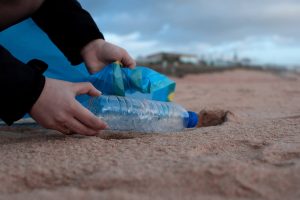
To provide the best possible business infrastructure and improvements solutions to organisations in sustainability industries, and for my own information and progress, I continually research and learn as much as I can about those industries. And I’ve found myself particularly interested in waste management and recycling. Where does our waste go? How do we deal with it? And how big is the ‘plastic problem’ – really?
Through reading and listening to the latest analysis by plastics industry experts, I soon realised that this is far from the black and white issue it’s presented as in the media. So – even though I’m still learning, I wanted to share some of the information with you that I’ve found so far, in the hope that you’ll find it just as valuable as I have.
Let’s Look at the (Much) Bigger Picture
Any decent discussion of a product’s sustainability must include some consideration of its full life cycle.
A Life Cycle Assessment (or LCA) is a method of calculating the environmental impacts associated with the entire life cycle of a product, process, or service. This begins with the extraction of raw materials and ends with the item’s final disposal and/or destruction.
In the book “How bad are bananas?”, Mike Berners Lee argues that an LCA should measure the full impact of a product or process on the planet, rather than just the way it’s disposed of. So, for example, rather than seeing the impact of a plastic supermarket carrier bag as litter on a landfill, we need to look at the combined ecological cost of its production, use, and disposal. To decide what other option might be better, we can then compare the plastic bag’s LCA to similar capacity bags made from different materials.
It’s also important to consider the ways in which the life cycles of these different products relate to each other and support each other or not. In terms of plastic, the impact of it not being recycled or disposed of properly is certainly damaging, however statistics show that plastic waste is a small part of overall waste. In 2018, for example, plastic waste in the UK only accounted for 0.8% of total waste generated according to government statistics.
And, in some cases, plastic is vital in reducing greenhouse gas emissions. This is especially true when it comes to food loss and food waste, which accounts for 8.2% of all GHGs. That’s the equivalent of the emissions of all road transport! Plastic in our supply chains minimises food waste and increases food security. But the problem of how to dispose of it remains.
Paper and Glass are Better than Plastic, Right?
Nope, not always.
Remember when we cared about the rainforests and using too much paper was a no-no? Well, we need to view our use of paper with similar caution now, but for different reasons.
According to Mike Berners Lee, “the paper industry is highly energy-intensive… Even a lightweight recycled paper bag produces slightly more greenhouse gas emissions than a typical plastic carrier”. He lists the CO2 emissions (CO2e) for the full life cycle of different carrier bags as follows:
- Standard disposable supermarket plastic bag – 10g CO2e
- Heavyweight, reusable plastic bag – 50g CO2e
- Recycled and lightweight paper bag – 12g CO2e
- Elaborate bag from mainly virgin paper (as supplied by many clothing retailers) – 80g CO2e
So, choosing a plastic carrier bag and reusing it as many times as possible before recycling it can be better than buying the equivalent bag made from paper.
In this podcast, materials scientist and Director of the University College London Institute of Making, Professor Mark Miodownik explained that the same goes for glass bottles. Many people assume these are better for the environment. However, Mark points out that plastic milk bottles, for example, are lighter and therefore use less fuel for transport. They result in fewer breakages, and therefore less milk wastage. They’re easier to clean, and therefore more hygienic and more likely to be reused. And, if chemical recycling is used to break them down at the end of their lifespan, they can continue to be part of a circular economy.
Mark sees chemical recycling as the future of recycling plastics. I won’t delve into the science of how it works, but what’s important to know is that this process allows recyclers and manufacturers to keep plastic going around in a circular economy. However, chemical recycling is currently energy-intensive and expensive. So, it’s less common than other ways of recycling plastic.
Big Brands Promoting The ‘Plastic Is Evil’ Agenda
In December 2020, H&M announced that they would be trialling “a new portfolio of recyclable paper packaging solutions” for their e-commerce channels. In February 2021, Coca Cola made headlines with its testing of a paper bottle “as part of a longer-term bid to eliminate plastic from its packaging entirely”.
Why are they experimenting with paper when its impact on our environment is so much worse than recyclable plastic options?
I asked leading environmental expert, plastic materials consultant, and author ChrisDeArmitt, for his comments on these campaigns. Chris says they’re testing paper packaging because consumers don’t understand the science behind paper vs plastic. Basically, well-meaning but ill-informed consumers assume that, by buying paper-packed products, they’re doing their bit to protect the environment. With the public’s increasing recognition of the link between human behaviour and climate change this is attracting more customers to these brands. So, essentially, it’s in their commercial interest to promote myths about how bad plastic is.
Now, the science of plastic is complicated – I’m not going to pretend that I understand it all! And I’m not suggesting that there aren’t problems with the human consumption of plastic-based products. However, once we all understand that plastic is not the centre of the problem, but that our system of plastic use is broken, we might find ways of working together to fix it faster.
So, back to recycling…
What About the Recycling We Do at Home?
Despite England making good progress on recycling over the last twenty years, with the rate of recycling rising from 11% to 44% between 2000 and 2020, most of that occurred pre-2010. It’s slowed dramatically since then.
To add to that, not all plastics are made equal. Particularly in terms of their recyclability. So, whereas there are systems in place in the UK to recycle polypropylene, high-density polythene, and PET relatively easily, there are comparatively few options for recycling thin plastic packaging. And, given that over 2 million metric tons of plastic packaging is being used in the UK every year, that’s a pretty serious problem to have!
In fact, the Waste and Resources Action Programme (WRAP) estimates that plastic packaging accounts for nearly 70% of our plastic waste in the UK. That’s 25% of the packaging purchased by the average consumer, yet only 4% of that is recycled. The rest goes to landfills or is incinerated.
That brings me to material-based attempts at plastic waste solutions.
Biodegradable vs Compostable Plastic
At first, swapping out regular plastics for biodegradable or compostable options might seem like an obvious answer to our plastic waste pandemic. Unfortunately, it’s not quite as easy as that.
Biodegradable plastic emits less methane and CO2 than regular plastics when produced. But that’s negated by the fact that it can’t be degraded without being put through an industrial high heat composting facility with the right temperature, humidity, and bacteria needed to break it down. So, most biodegradable plastic ends up in landfills or a regular waste incinerator.
When it comes to ‘home compostable’ plastic Mark Miodownik explains that the jury is out on whether these plastics actually do decompose in all conditions or not. Mark and his UCL team are currently researching this with the help of members of the public through the Plastic Waste Innovation Hub’s citizen science research programme. You can get involved with that here.
What’s the System-Based Solution?
When considering the life cycle of a material, it’s easy to get fixated on the substance itself. But, as Mark Miodownik points out, “There are no sustainable materials. Only a system can be sustainable.”
So, what really matters is what resources go into making the material, the impact and longevity of its use, and our ability to recycle it so that it’s part of a circular economy.
There are scientists and organisations working to create effective and efficient circular plastic systems for many different industries, including packaging.
For example, WRAP’s UK Plastics Pact aims to bring businesses, government departments, and NGOs together to transform the way the UK makes, uses, and disposes of plastic. They have several targets, which they aim to reach by 2025. These include:
- Eliminating problematic or unnecessary single-use packaging through redesign, innovation, or an alternative (reuse) delivery model.
- 100% of plastics packaging to be reusable, recyclable, or compostable.
- 70% of plastics packaging effectively recycled or composted.
- 30% average recycled content across all plastic packaging.
However, we won’t reach these targets without radical change and support.
So, what can you and I do in the meantime?
5 Top Tips to Help the Environment
1. Rather than worrying about plastic, whether you should use it or not, or if you should replace plastic with something else, try to simply reduce your overall consumption. Choosing to make fewer journeys by car, purchase less clothing, borrowing items from friends and family and re-using containers and bags you already own, all saves you money and reduces your impact on our planet.

2. Consider the life cycle of your purchases. Is there a way to responsibly recycle what you’re buying? If not, can you find a recyclable alternative?
3. Choose better quality items that last longer, are reusable, and can be resold. They can save and sometimes make you money in the long run. What’s not to love?
4. There are NO sustainable single-use products! They all have an impact in one way or another. So, it’s best to avoid all single-use items, such as disposable plastic cutlery and crockery, polystyrene packaging, cotton buds with plastic stems, plastic straws, etc.
5. If you own or run a business, consider the impact of the materials in your products, services, and office space—design with end-of-life collection and remaking in mind.
Plastic isn’t the problem – humans are. But, if our broken systems are fixed or replaced very soon, I’m hopeful that we can turn our negative impact on the planet around. In the meantime, let’s use plastic responsibly and recycle it appropriately.
To follow my sustainable industry learning journey, look out for future posts on our blog.
To find out how my team and I can help you to implement better systems within your business, get in touch today for a free no-obligation consultation.
