
Effective leadership can make the difference between successful organisational change and failure. A leader’s role during the change process is to direct their business and motivate their employees. Leaders are responsible for envisioning and driving the change. If done right, leadership can boost performance and the outcome of your organisational change. Sounds great right?
Now we just need to know how to be that leader. In this article, we’ll provide some of our practical tips and strategic guidance for leaders tasked with managing organisational change.

Leadership Qualities for Managing Organisational Change Effectively
To manage organisational change effectively, leaders must possess certain leadership qualities that will help them bring out the best in their change initiative and their team. There are so many qualities that leaders should possess but we’ve plucked out what we think are the most important when managing change:
Vision
Leaders need to have a clear and compelling vision for the business’s future. Without a clear vision, you’re just going to get lost in your change journey. It’ll be like walking through the fog! A well-articulated vision helps to clear that fog and guide and inspire employees throughout the entire change process. For a leader to effectively persuade and motivate their whole team, they need to know exactly what the change needs to be.
You wouldn’t start a journey in your car somewhere new without putting something into the Sat Nav, so why would this be any different?
Emotional intelligence
Emotional intelligence is often an overlooked quality of a leader yet it’s so important. A good leader is a leader with emotional intelligence. No, it’s not just knowing WHAT the team are feeling but being able to understand WHY they are feeling that way and how to manage those emotions. It’s a big skill to be able to handle those interpersonal relationships during times of change.
A great way of improving emotional intelligence during change is to understand the change curve. The Kübler Ross Change Curve is a change management model that depicts 5-stages of grief: denial, anger, bargaining, depression, and acceptance. It’s a great way for leaders to better understand the emotional turmoil faced by employees due to change initiatives.
Decisiveness
Not every decision in the change process is going to be easy. There’s going to come a time when the leader is going to have to make some tough decisions quickly and confidently. By making those decisions, they ensure that the momentum of change initiatives is maintained.
A decisive leader can set clear expectations as well as provide a sense of purpose and direction within the team. The clarity will help reduce ambiguity, enhance productivity and essentially drive innovation.
Strategic Practices for Leading Change
Leading change is not a simple step-by-step process. It will vary depending on you, your business and your team. A leader’s job is to implement strategic practices that help lead change in the way the business works. We’ve selected our top strategic practices:
Engaging and communicating
There are many different strategies we love for ensuring effective communication during organisational change. Some of these are regular updates and transparent dialogue to keep all stakeholders informed and engaged.
Communication is a common challenge that we see a lot in our field of work. It’s a barrier that many businesses face, especially when working remotely. If you don’t communicate clearly with your team what’s happening, how can you expect them to be engaged? A leader’s job is to make sure there are processes in place to ensure clear and efficient communication. For example, weekly meetings to provide updates and allow the team to provide their input and feedback.
Champions of change
Building a supportive coalition of key stakeholders who can champion the change within the organisation is important. Successful change is rarely achieved through the efforts of just one individual so building a team of people who can promote a culture of change.
Change champions are crucial in supporting and driving successful change initiatives. They promote effective communication as they act as a bridge between the leadership team and the rest of the organisation allowing for clear and consistent communication. They also sustain the change momentum by monitoring progress, celebrating milestones, and reinforcing the benefits of the change to the team.
Managing resistance
When you pull, you’re going to get resistance. It’s natural. Luckily, for leaders, there are practical strategies for anticipating and managing resistance to change. One of the main things for a leader to do to manage resistance during the change process is to listen. Leaders need to be able to listen to and address their team’s concerns openly and honestly. By doing this, the team will feel heard and will be less likely to resist the process. Another strategy is for leaders to involve sceptics in the planning process. Give them a seat at the table so they can see in full transparency what’s happening and why. This will help give them a clear understanding of the initiative.
If you want to read more about the challenges of change management such as communication and resistance to change, check out our blog here.
Implementing and Sustaining Change
Now we’ve gone through the qualities and practices leaders need to possess and follow when leading change initiatives but how do we implement them? It’s fair enough knowing the what, you also need to know the how. Here are our favourite ways of implementing and sustaining the change:
Creating short-term wins
A win is a win, no matter how big or small it is! It’s important to create and celebrate those short-term wins as well as the long-term wins. It’s like climbing a mountain; you don’t celebrate just when you get to the top, you celebrate at each checkpoint because you’re on your way up. Celebrating the small wins is a great way to maintain positive momentum.
Continuous improvement
A continuous improvement mindset is essential during organisational change. If leaders actively seek out feedback and use it to refine ongoing change efforts, they’re more likely to implement successful change. Feedback can be tricky to hear sometimes but it’s how you handle that feedback that’s important. If you just toss it in the bin and forget about it, then what’s the point? But if you use the feedback then you’re more likely to grow and succeed. A leader needs to be able to listen to their team’s input and embrace it.
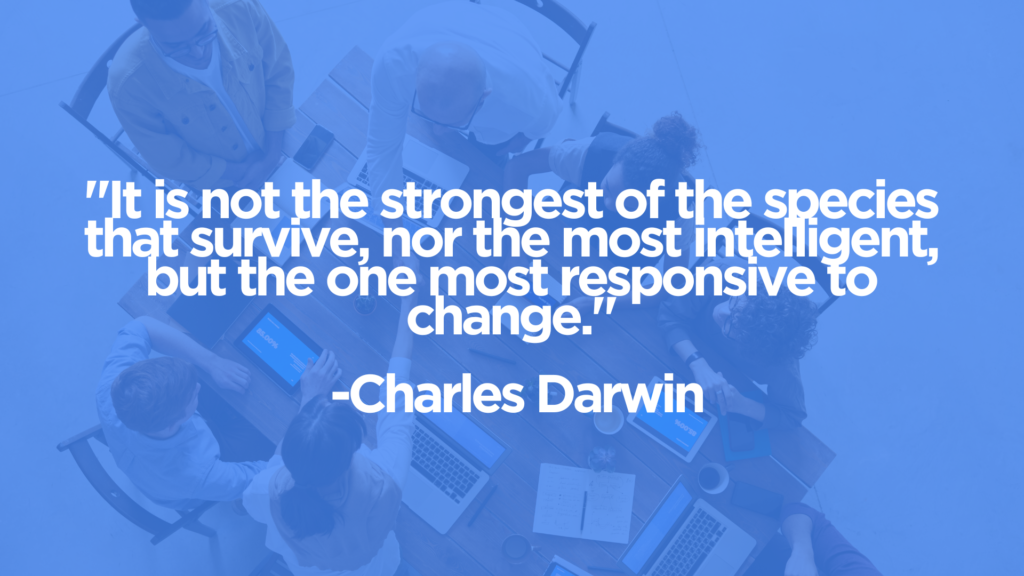
A leader who can respond to change, direct their business and motivate their employees is the key to successful organisational change.
Key Takeaways
We’ve had a look at what qualities and practices help to effectively lead organisational change. Let’s summarise:
- Leadership Qualities- A good leader needs to have a vision, emotional intelligence and decisiveness. They need to be able to know what change they want, how to manage their team’s emotions and how to make prompt decisions in the change process.
- Strategic Practices- Engaging and communicating, championing change and managing resistance are all strategies that help leaders to effectively lead their business through change. By communicating with regular updates and transparent dialogue, building a supportive coalition of key stakeholders to champion the change and addressing concerns to manage resistance, leaders can ensure they are doing what they can to ensure success.
- Implementing and Sustaining Change- If a leader embraces continuous improvement and celebrates the little wins, they’re encouraging team motivation and growth. By being open to feedback and sustainability, leaders are more likely to succeed as they welcome their team’s opinions.
So you now know what you need to do to lead your organisational change effectively, but you don’t know what the next steps are. We’ve got a free resource and within minutes, you’ll know how ready you are to lead effectively and what gaps you need to fill. Check out our Four-Minute Change Readiness Quiz to see where you are in your change process!
